
How do people trust your website?
It’s not after reading your headline. It’s not after comparing your offer. And it’s definitely not after scrolling through your entire page. It happens before all of that. It only takes a fraction of a second for users to form an opinion about a website, and it all starts with how your site looks. Your website’s design is what always makes the first impression. And in most cases, it’s already made the decision.
Most businesses underestimate this. Website design is not just about looks; it lets people quickly judge if you are worth their time.
Design Isn’t Decoration; It’s Judgment
Many believe design is just a finishing touch. In reality, it signals credibility and drives instant judgments through website trust factors.
A clean layout communicates professionalism, a structured interface signals clarity, and a cohesive visual system suggests intention. On the other hand, cluttered pages, inconsistent styles, and poor hierarchy don’t just look unpolished—they introduce doubt. And once doubt enters the experience, it becomes difficult to recover.
Because at that point, users are no longer evaluating your product. They’re questioning whether they should stay.
The Problem Isn’t Always Your Offer
When conversions drop, most focus on their offer, pricing, or messaging. These matter, but sometimes the real problem is the user experience.
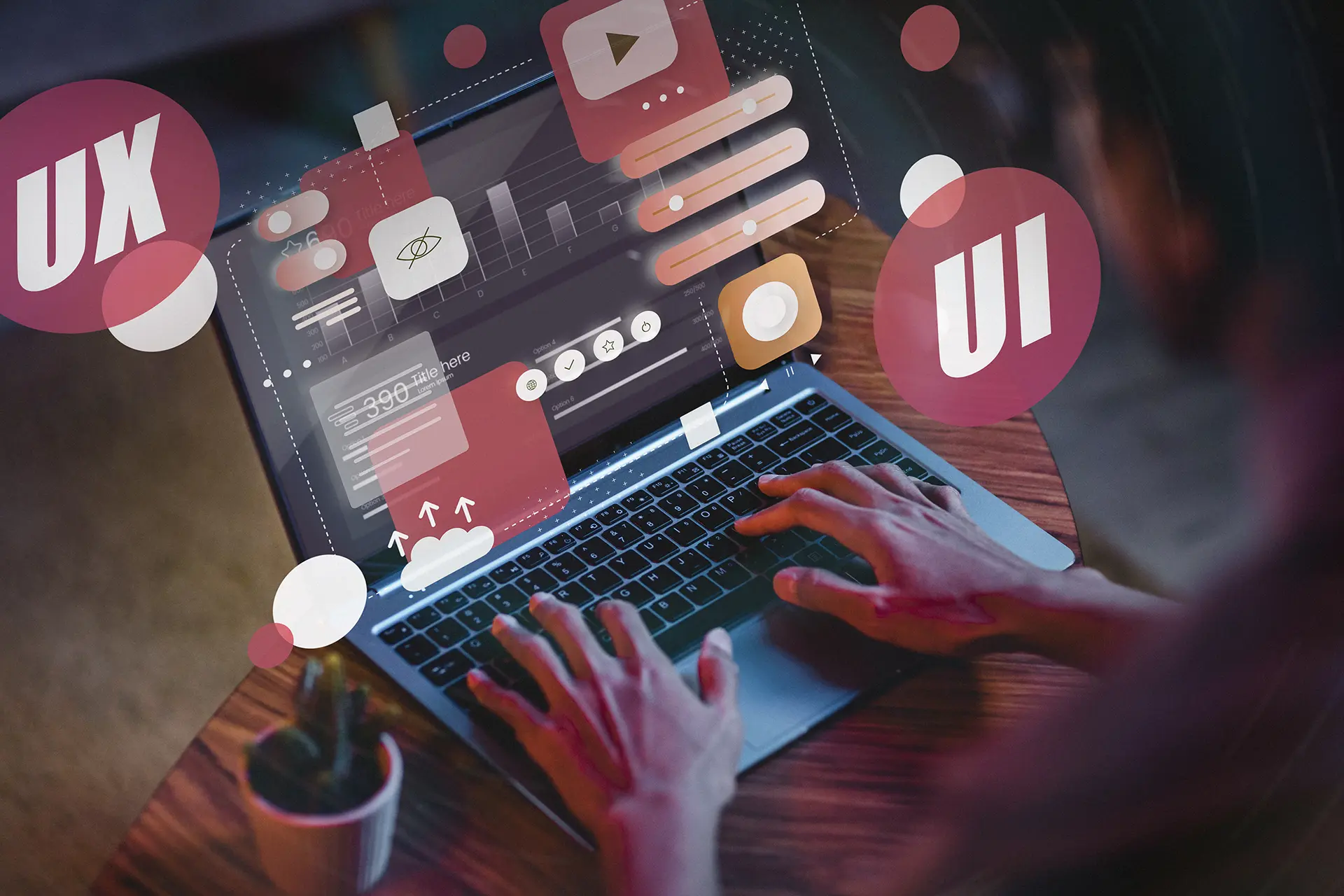
This is where UX and UI become critical. When a website creates even small amounts of friction, whether through unclear navigation, overwhelming visual load, or too many competing elements, users don’t stop to analyze what’s wrong. Instead, they respond instinctively and leave.
It’s rarely a conscious decision. The experience doesn’t feel right.
That feeling, above any rational evaluation, determines if someone stays or goes.
Friction Doesn’t Announce Itself
One reason friction is so dangerous is that it doesn’t present itself as a clear, identifiable issue. Instead, it appears subtly through hesitation. A slight pause while searching for the next step, a moment of confusion about where to click, or a sense that there is too much to process at once.
Each moment of friction seems minor, but together, they build up. Eventually, leaving feels easier.
Frictionless design is key to conversion. The goal is to remove barriers so movement feels natural and easy.
Because the fewer users have to think about the experience, the more they can focus on the decision.
More Design Doesn’t Mean Better Design
When businesses begin to recognize the importance of design, the instinct is to add more—more visuals, more animations, more elements competing for attention. However, effective design rarely works this way. Instead, it simplifies. It reduces visual load so users aren’t overwhelmed, creates a clear hierarchy so they know where to focus, and aligns elements in a way that feels seamless.
Good design doesn’t try to impress users with complexity. It guides them with clarity. Because the goal isn’t to make users notice everything, but to make sure they notice the right things at the right time.
Trust Isn’t Built Through Explanation
Many brands add content—long descriptions, more details, extra information—to build trust. This helps credibility, but trust begins elsewhere.
Trust starts with how your website feels.
Users form impressions from experience before reading about your expertise or value. Trust grows in layers, with design as the first.
Everything else reinforces what has already been decided.
What High Bounce Rates Are Really Telling You
A high bounce rate is often interpreted as a lack of interest, but in many cases, it signals something deeper. It reflects a sense of discomfort: something unclear, misaligned, or requiring more effort than expected.
Rather than trying to resolve that friction, users take the easier path and leave.
Bounce rates are often missed signs. The problem is not always content or offers, but a disconnect between user expectations and experience.
Because when a website feels confusing, users don’t separate the design from the brand—they see them as one and the same.
Design Is the First Conversion
Before clicking, signing up, or buying, users make a quieter decision: they choose to stay.
That choice is shaped by cues like credibility, clarity, and ease—by whether your design feels intentional and structured. Once trust is set, everything gets easier. Navigation feels natural, messaging becomes clearer, and actions flow smoothly.
Because conversion doesn’t begin with action, it begins with trust.
The Bottom Line
Trust doesn’t happen after users understand your brand. It has happened before. And in that moment, your design is doing all the talking.
If your website isn’t converting, it’s not just a design issue—it’s a trust issue. Even the best offer won’t matter if users don’t feel confident enough to stay.
Ready for your website to build trust and drive results from the first second? Contact Fortify today to transform your website into an experience that converts.
Because in the end, design doesn’t just support your message. It determines whether your message even gets a chance.